

Tauutuutu: escalating reciprocity.
The Māori principle of escalating reciprocity.
Tauutuutu embodies a sophisticated framework of reciprocity that has been fundamental to Māori society for generations. It weaves economic, social, political, and environmental relationships into a complex tapestry of mutual obligation and benefit.
Tauutuutu white paperAt its core, tauutuutu is an ongoing cycle of reciprocal exchanges that builds and strengthens relationships over time. While often described as "balanced exchange," this translation misses a crucial element that makes tauutuutu unique: the principle of escalation.
In tauutuutu, each exchange builds upon the previous one, creating deeper and stronger bonds between parties. Whether in times of celebration or challenge, these exchanges grow in significance over time. The obligation to reciprocate was so powerful that people would often go to great lengths to meet their obligations, sometimes offering their most precious possessions, from treasured taonga and pounamu to prized cloaks, and in some cases, even land.
Hākari: the feast of reciprocity
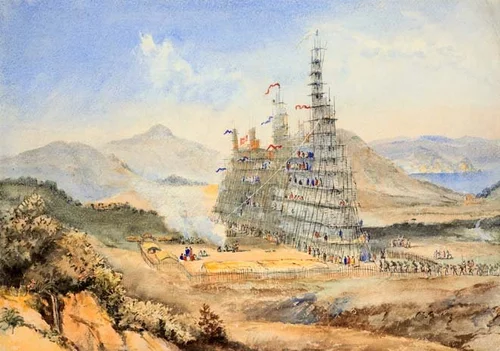
One of the most potent expressions of tauutuutu was the hākari (feast). These were not simple gatherings but events of profound significance. Hākari demonstrated a chief's mana both within their hapū and to their guests.
- The distribution of food followed careful protocols, with the host chief allocating portions to specific hapū
- Guest hapū were obligated to provide a reciprocal feast that matched or exceeded the original
- This created a dynamic equilibrium of hosting duties that maintained and strengthened inter-hapū bonds
Kaihaukai: specialised exchange networks
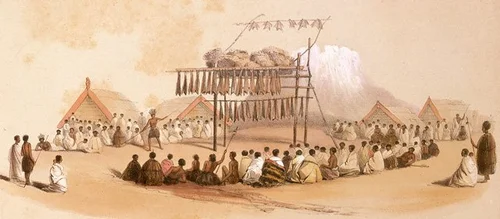
Kaihaukai represented a specialised form of tauutuutu focused on addressing resource and skill imbalances between geographically separated groups. This practice:
- Enabled coastal dwellers to exchange seafood with inland tribes
- Allowed specialised craftsmen to be temporarily "traded" between hapū
- Created lasting relationships between distant communities
- Evolved from purely utilitarian trade into deeper social bonds
Beyond simple trade
What made kaihaukai unique was its evolution over time:
- Initial exchanges might begin as practical trade
- Regular interactions led to the ritualisation of the exchange
- Outright haggling or bargaining was considered inappropriate
- As connections grew, utilitarian bartering transformed into a meaningful gift exchange
- Relationships often persisted across generations
The role of kinship and friendship
Tauutuutu exchanges required a foundation of relationship:
- Some degree of kinship or friendship was typically necessary to initiate an exchange
- Regular trading relationships often indicated distant family connections
- These relationships could persist for generations, with visits timed to specific resource seasons
- The social bonds created were as valuable as the goods exchanged
Tauutuutu represents far more than a system of exchange. It is a sophisticated framework that transforms simple transactions into enduring relationships. What might begin as a practical trade between communities could evolve into a multi-generational bond, with exchanges becoming increasingly ritualised and socially significant over time. These relationships were carefully cultivated, with outright bargaining considered inappropriate and replaced by more nuanced forms of reciprocity. The practice created intricate networks of obligation and reciprocity that bound communities together, ensuring both material and social prosperity through carefully escalating cycles of exchange.
Environmental and spiritual dimensions
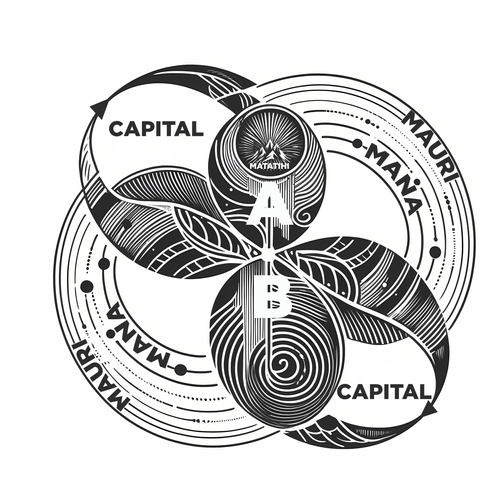
Tauutuutu extended beyond human relationships to encompass:
- Responsibility to the natural world
- Acknowledgment of spiritual connections
- Recognition of the interconnectedness of all things
- Sustainable resource management through shared access and reciprocal obligations
While secondary to its cultural significance, tauutuutu offers valuable insights for modern business and community relationships.
- Relationship development: encourages a long-term perspective, builds deeper connections over time, creates lasting partnerships.
- Trust building: begins with small acts that gradually increase in scale, creating self-reinforcing cycles of cooperation and reducing the need for formal enforcement mechanisms.
- Resource sharing: facilitates access to specialised resources, creates resilient supply networks, encourages sustainable practices.
- Risk management: develops mutual support systems and safety nets during challenges.
- Social capital: strengthens community connections and networks of mutual support.
- Sustainable growth: encourages long-term thinking, balanced development, and environmental consciousness.
Tauutuutu represents a sophisticated understanding of how relationships, economics, and society can harmonise. Its principles of escalating reciprocity, relationship building, and holistic thinking continue to offer valuable lessons for modern society, whether in business, community relations, or environmental stewardship.
Keep reading
- Tauutuutu: Mutually Beneficial Exchange
- Māori Economic Wisdom: Tauutuutu as a Model for Relational Dynamics in Business
- Sustaining Trade Through Generations: The Māori Ethic of Reciprocity
- Trust Before Profit: The Power of Reciprocity in Māori Business
- Reciprocal Exchange: Fostering Environmental and Organisational Value
- Whakapapa Economics: the wider framework
Measuring value that moves through relationships.
Tauutuutu is one of the principles behind how we measure social impact for Māori organisations — value that travels through whānau, place and generations, not just the individual. If you need to evidence and report that kind of value, that is our impact assessment and SROI work, grounded in the open method of Whakapapa Economics.
Get in touch
Start with a conversation.
The first kōrero is free, with no preparation needed. Tell us what you are working on and we will tell you honestly whether we can help.
Get in touch